

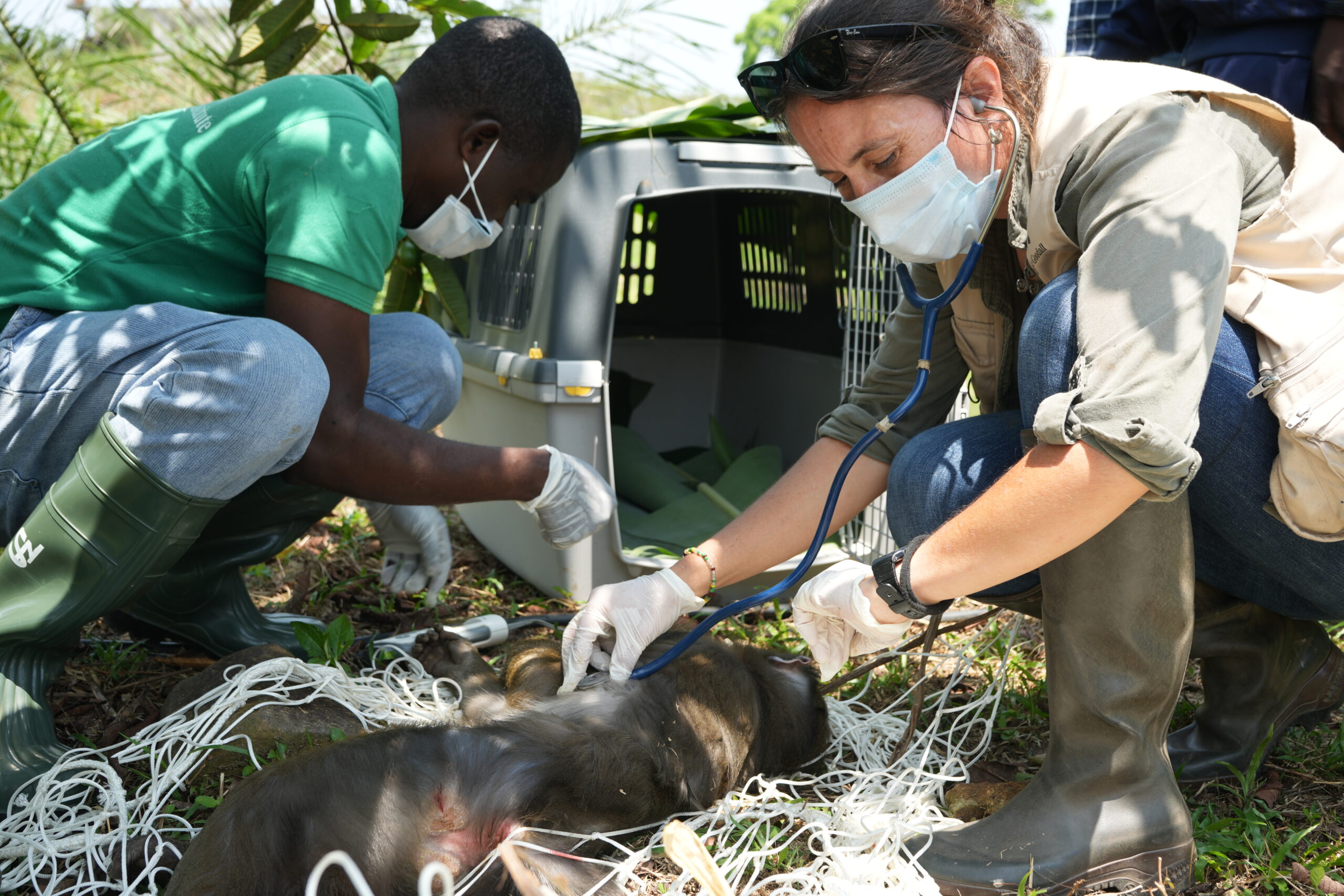
When authorities became aware of a chimpanzee being kept illegally by a family in Equatorial Guinea, JGI and its partners stepped into action. That chimpanzee was Lola, a young female living far from the forests and social groups she needed to survive.
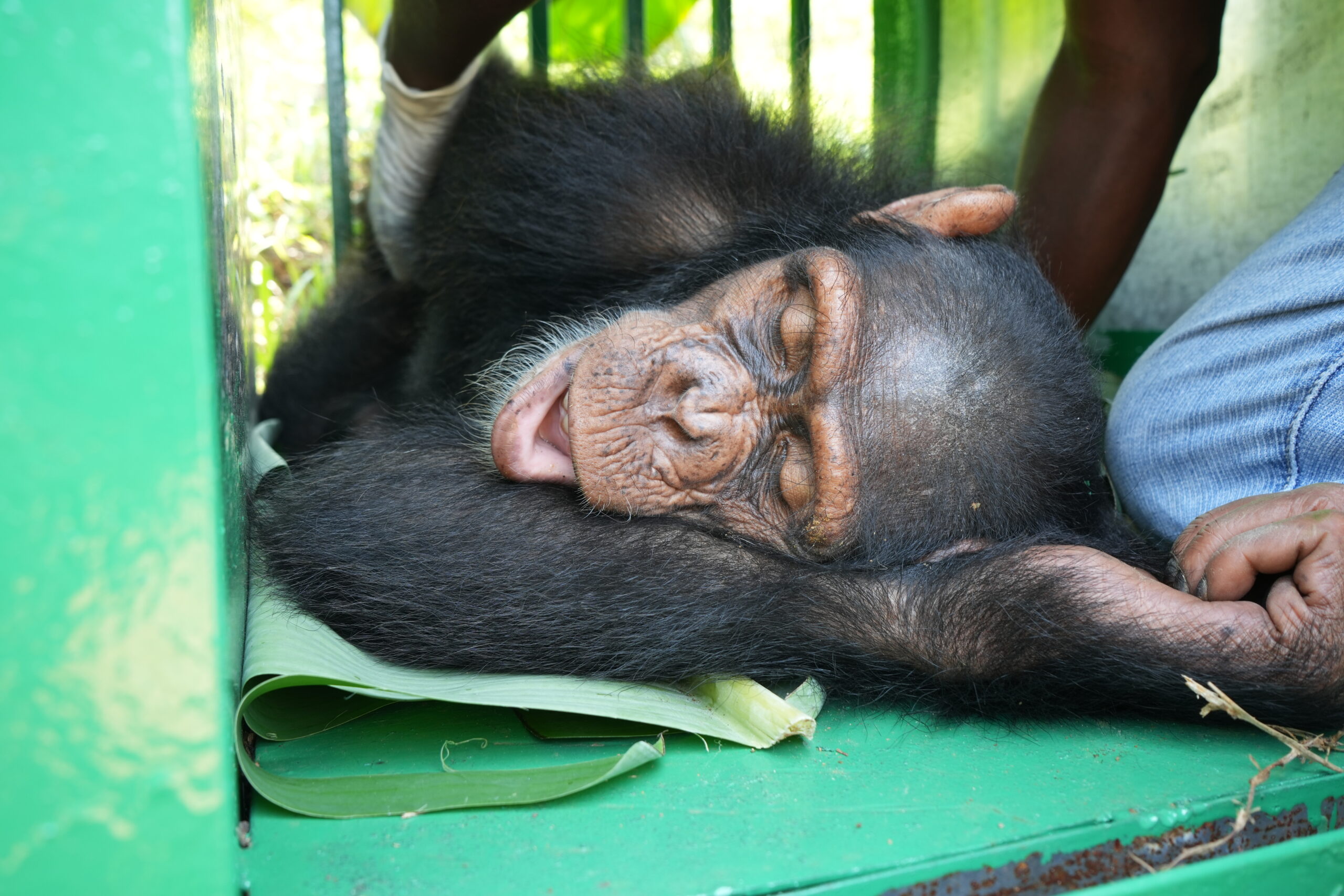
As officials moved forward to assess her situation, they discovered that Lola was not alone. An adult mandrill named Nico was also being kept in the household. This quickly became a far more complex effort involving two animals, each requiring specialized care and a carefully coordinated plan to reach safety.
The family caring for Lola and Nico made a critical decision to fully cooperate with authorities and conservation partners. That choice set in motion one of the most logistically demanding and highly coordinated rescue efforts undertaken by the Jane Goodall Institute and its partners.
A Rescue that Spanned Countries
Equatorial Guinea does not have a sanctuary equipped to provide long-term care for chimpanzees, which meant Lola could not remain in the country. JGI stepped in to lead the operation, designing and coordinating a plan to relocate both Lola and Nico to JGI’s Tchimpounga sanctuary in the Republic of the Congo.
This was not a straightforward transfer. It required months of preparation, government approvals, veterinary planning, and collaboration across borders. JGI worked closely with partners including the Pan African Sanctuary Alliance, The Drill Project in Equatorial Guinea, and Lekedi Reserve in Gabon to move this rescue forward.
While plans were taking shape, Lola and Nico remained in place, relying on consistent daily care provided by local caregivers who ensured their needs were met as the rescue came together.
Rapid Response to a Critical Delay
As preparations moved forward, the mission faced an unexpected delay when Lola became ill. For a young chimpanzee, even a short period of illness can become life-threatening, especially when combined with the stress of transport. Any sign of poor health at a border checkpoint could have resulted in detention under unsuitable conditions, placing her recovery and the entire mission at risk.
JGI responded immediately by deploying veterinary nurse Dunez Mouaya from Tchimpounga to Equatorial Guinea. After examining Lola, the diagnosis revealed two intestinal parasites that can severely weaken young primates.
Treatment began without delay. Under close monitoring and care, Lola began to recover within days. Her appetite returned, her strength improved, and the conditions needed to safely move her into sanctuary care were final in place.
Choosing Animal Welfare Over Convenience
JGI made the decision to transport Lola and Nico by road rather than air, prioritizing stability and control over speed. Ground transport would allow the team to closely monitor both animals and respond to any issues along the way, even though it meant navigating long distances and multiple international borders.
This decision introduced a new layer of logistical complexity. Before the team even arrived, the land border in Equatorial Guinea was closed, requiring special authorization to exit the country. Vehicles had to be arranged remotely, without the ability to inspect them in advance. When the team reached Bata in Equatorial Guinea, they discovered the available truck had a closed truck bed so it could not fit the transport crates required to safely move the animals. Without proper crates, the rescue could not proceed.
Under pressure and with limited options, the team worked quickly to secure a new vehicle with an open truck bed that would safely accommodate both Lola and Nico. With that final piece in place the mission could finally begin.
Coordination Across Borders
As one JGI team traveled to Equatorial Guinea to retrieve Lola and Nico, a second team was already driving across Gabon, positioning themselves near the border to support the next stage of the journey.
This level of coordination reflects the reality of rescues at this scale. Each step depends on timing, communication, and the ability to respond quickly to changing conditions.
On February 5, 2026, with permits secured and preparations complete, the team began the journey and successfully crossed into Gabon.
International Collaboration Under Pressure
The following day, the mission faced one of its most critical challenges. While traveling through Gabon, authorities stopped the team and detained them despite having the proper permits and documentation. Passports were confiscated, and the situation quickly became uncertain.
For Lola and Nico, the risk was immediate. Confined in transport crates on the roadside, they were exposed to stress and environmental conditions that could quickly affect their health, particularly for Lola, who was still recovering from her illness.
At that moment, the success of the entire mission depended on swift action. JGI acted quickly, drawing on long-standing relationships with government partners. The team reached out directly to leadership in the Republic of the Congo, where prior coordination had already established trust and communication channels.
The response was immediate. Gabonese authorities arranged an official escort, ensuring the team could continue safely across the country.
What could have halted the mission instead became a powerful example of international cooperation made possible through strong partnerships and shared commitment for wildlife protection.
Arrival and the Start of Recovery
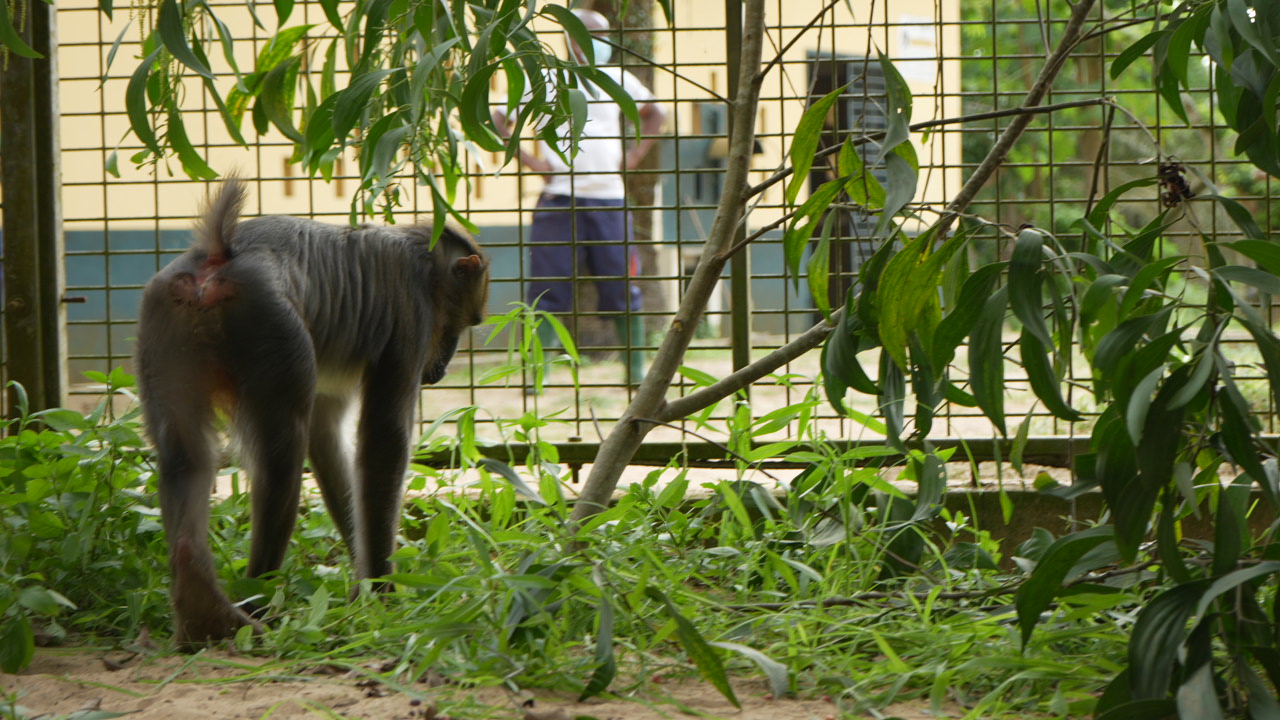
After several days on the road, the team crossed into the Republic of the Congo and arrived at JGI’s Tchimpounga sanctuary. There Lola and Nico were welcomed by JGI’s veterinary and caregiving teams.
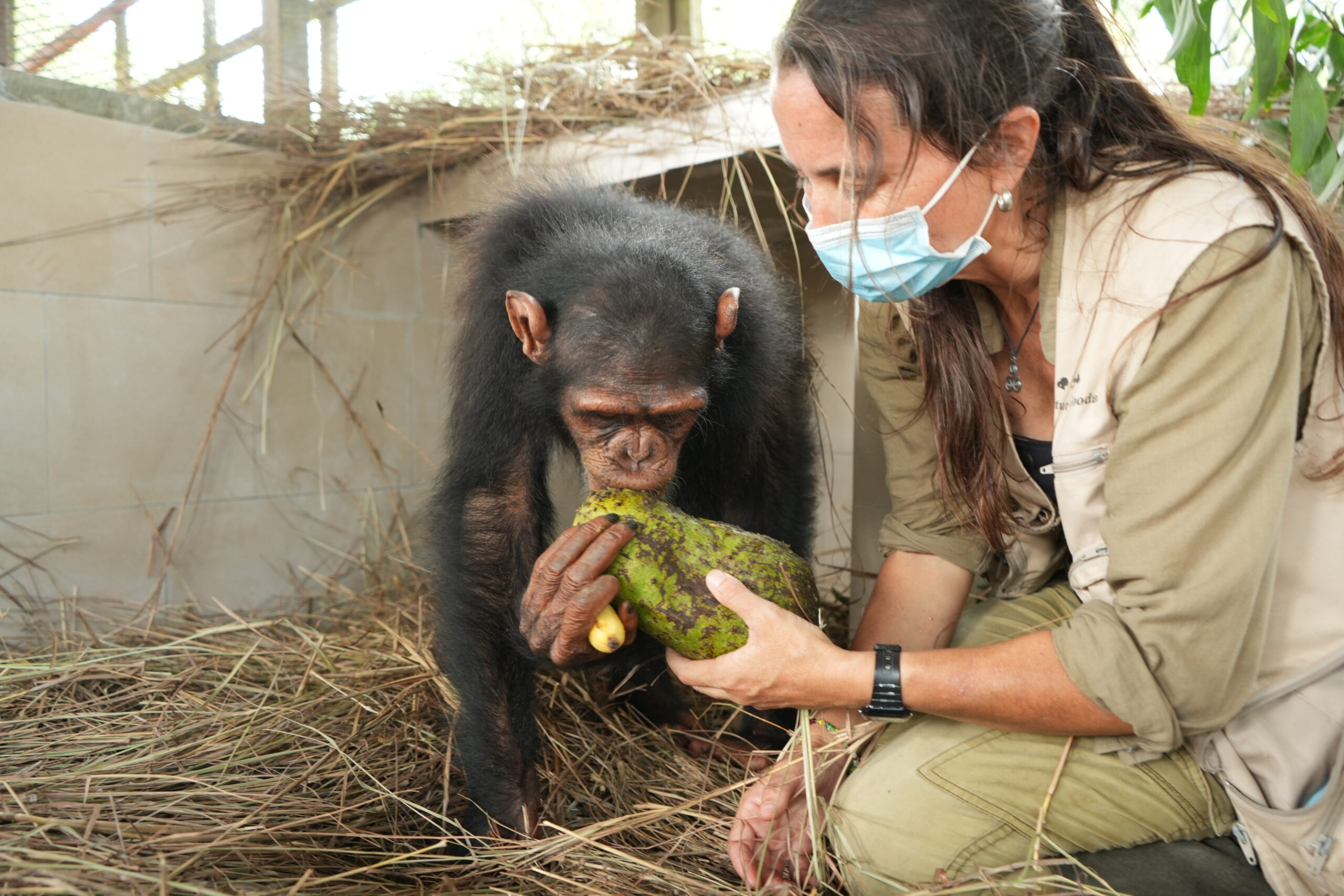
Lola entered quarantine under close observation, and even in her first hours she showed curiosity and calmness in her new surroundings. In time, she will begin the gradual process of meeting other chimpanzees and learning how to live within a social group.
Nico also began to recover, arriving underweight but otherwise stable. With proper care and nutrition, he will move toward integration with other mandrills and a more natural, enriched environment.
What It Takes to Make This Possible
This rescue unfolded over just a few days in February, yet it reflects months of preparation and the coordinated efforts of partners across multiple countries. JGI led the operation from start to finish, bringing together veterinary expertise, logistical planning, and government coordination, while working alongside dedicated partners who each played a critical role in making the mission possible.
These missions depend on more than urgency. They require experience, trust, and the ability to respond in real time when conditions change. Today, Lola and Nico are safe. Their journey across borders is complete, and their future has begun.
A Collective Effort Across Borders
This rescue was made possible by the expertise, coordination, and commitment of individuals and partners working across countries. The following individuals and organizations directly contributed to the successful rescue and transfer of Lola and Nico.
- Jane Goodall Institute Republic of the Congo
- Bob Mampaka – Congolese Agency for Wildlife and Protected Areas (ACFAP) representative and Congolese government partner who supported transport and facilitated government coordination, including permits.
- Cyrille Mouele – Operations manager who supported transport and logistics on the ground.
- Dr. Rebeca Atencia – Led the rescue mission, overseeing planning and ground coordination.
- Dunez Mouaya – Veterinary nurse who diagnosed and treated Lola prior to the transfer.
- Paloma Corbi – Supported planning and on-the-ground coordination throughout the mission.
- Roland Mabila – Tchimpounga sanctuary manager who assisted with animal care and transport.
- Silvia Espinosa – Strategic lead for the operation, maintaining communication across partners and ensuring execution.
Partner Organizations and Key Collaborators
- Adrián Granado – Coordinated vehicles, accommodations, and flights during the final stages of the mission.
- Eric Willaume (Lekedi Biodiversity Foundation, Gabon) – Provided strategic guidance and support for cross-border coordination and permits.
- Jane Goodall Institute Spain – Provided financial support and helped coordinate partners.
- Laura Fernandez (Equatorial Guinea) – Supported animal care and coordination on the ground.
- Laura Simó (The Drill Project, Equatorial Guinea) – Led in-country coordination, facilitating access, communication, and local support.
- Ncogo Ayong Deogracias (Ministry of Agriculture, Livestock, Fish, Forests, and Environment, Equatorial Guinea) – Negotiated and secured authorization for cross-border transfer.
- Nora Fernandez (Equatorial Guinea) – Provided daily care for Lola and Nico prior to rescue and supported local arrangements.
- Pan African Sanctuary Alliance – Provided financial support and supported regional partner coordination.
Photo credits: Paloma Corbi
*The Jane Goodall Institute does not endorse handling or close proximity to wildlife. These photos represent a sanctuary context with trained professionals, including wildlife veterinarians.*

